Software built for industrial & MRO distributors
CRM, online storefront, and service & inspection. Each one built for how this trade works: your pricing rules, your vocabulary, your processes. We do not ask you to change any of them.
What we build
Most distributors end up needing more than one: the counter that takes the order, the book that brings the customer back, and the calendar that brings the equipment back. They are built to work together, and each stands on its own.
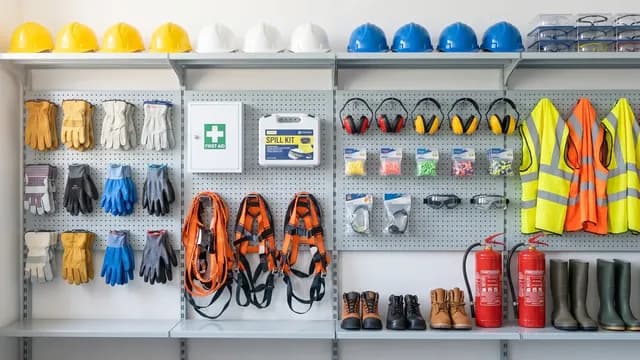
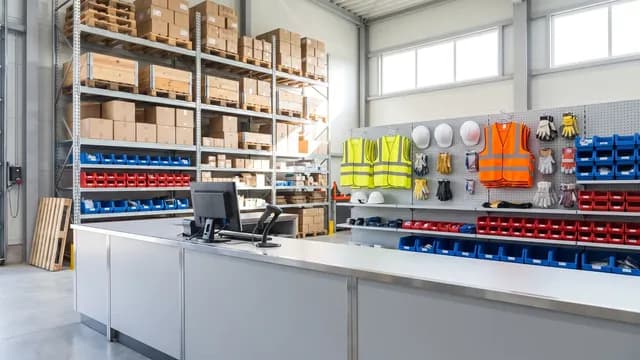
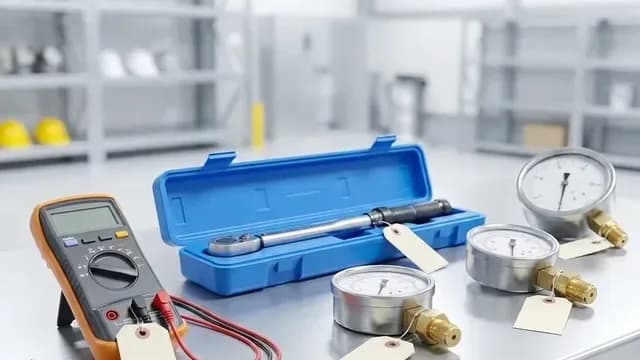
Everything the storefront learns about an account, the sales team should already know. Run both and they share one customer record.
Don't take our word for it. Open them.
Both demonstrations are live. No form, no sign-up, and no booking a call to see a screenshot.
The storefront
A working industrial catalogue. 145 lines across 24 categories, spec search, contract pricing and a quote-first checkout.
The CRM
A live territory map, accounts that nest into departments, and equipment carrying its own service dates. A working application, not a video.
You do not adapt to the software. It adapts to you
Every distributor in this trade runs differently, and the ones who last have processes worth keeping. Off-the-shelf products ask you to give those up. We map what you already do and build to it, AI-first from the data model up.
Built around your processes, not a template you squeeze into
We map how the business runs first, on site, including the parts nobody has written down. The workflow you already have is the workflow the software follows. Off-the-shelf products make you change to suit them, and the change is where the cost hides.
AI-native, not a tool with AI added on
Built AI-first from the data model up, so the intelligence sits inside the work rather than in a box bolted to the side of it. That is a different thing from a conventional system with an assistant added late, and it shows in what the software can do with what it knows.
Your vocabulary, on every screen
Your product lines, your customer types, your stages, called what your people already call them. A system that renames everything gets worked around within a month, and the workaround becomes the real process.
What we've shipped
Five systems running for real businesses. Identifying details are changed for confidentiality; the work is not.
A national safety and industrial distributor. Territory ownership and per-rep books with isolation enforced in the database, and a follow-up list where a customer with a live deal that has gone quiet is back in front of the rep every morning until someone calls. Zero territory disputes.
Anonymised client engagementIndustrial equipment dealers. An AI-native lead platform, one tenant per dealer, scoring inbound enquiries before they reach a rep.
Anonymised client engagementAn industrial OEM's field service arm. Answers pulled out of manuals and service history in seconds, with page-level citations back to the source document.
Anonymised client engagementA multi-agent marketing system. Seven agents running in production at effectively zero marginal cost per run.
Anonymised client engagementOur own operations. AlterFlow runs on the same kind of system we sell. Every decision, approval and outcome is written down somewhere the AI can find it.
Built and used by AlterFlow
Everything on these shelves has a price, a stock level and an owner. Some of it also has a date.
Validate quickly, then build what holds up
Spec the outcome
Outcome, inputs, success signal. Not a feature list.
Prototype with agents
Working software in days, not a slide deck
Lock the blueprint
Data model, permissions, integrations, feedback loops
Build software-factory style
Specs and tests drive agents. A small team ships a lot
Deploy and improve
Launch, watch real usage, the system improves each week
Built like an AI-native team, because we are one
One engineer at the keyboard. AI agents writing most of the code under direction. That is how we reduce delivery overhead.One engineer at the keyboard. AI agents writing most of the code under direction. A small team of operators on review, testing, and deployment. That is how we move quickly without treating review or maintainability as optional.
One engineer plus agents
Most of the code in your project is written by AI agents under direction. The human at the keyboard is the one shipping it.
Specs and tests, not tickets
We write the outcome we want and the tests that prove it. Agents iterate until the tests pass. That is the source of truth.
You pay for the system, not the org chart
Agent-assisted delivery reduces coordination overhead, so we can often quote materially less than traditional firms. Scope, risk, and outcome still determine the final price.
Security and governance
Security requirements are designed into each engagement from day one and validated against your review process. We host the system for you. Running it on your own servers is available by arrangement.
Role-based access control
permissions by role, team, region, and partner
Audit logs
trace who changed what, when, and why
Encryption
data encrypted in transit and at rest; secure secret management
SSO
SAML/OIDC when required
Data residency
deploy in your preferred region (Canada, US)
Monitoring
logs, alerts, and operational dashboards
Tell us where execution breaks
Tell us the workflow your team complains about every week. We'll map it, prototype a version where the AI earns its place, and give you a realistic plan including scope, timeline, and cost within two weeks.