
Real-Time Credit Line Management for Invoice Financing
Introduction Key Takeaways No-code AI workflows can provide real-time cash visibility, dynamically adjust credit limits, and automate collections to reduce DSO. Integrating accounting, CRM, and AR too
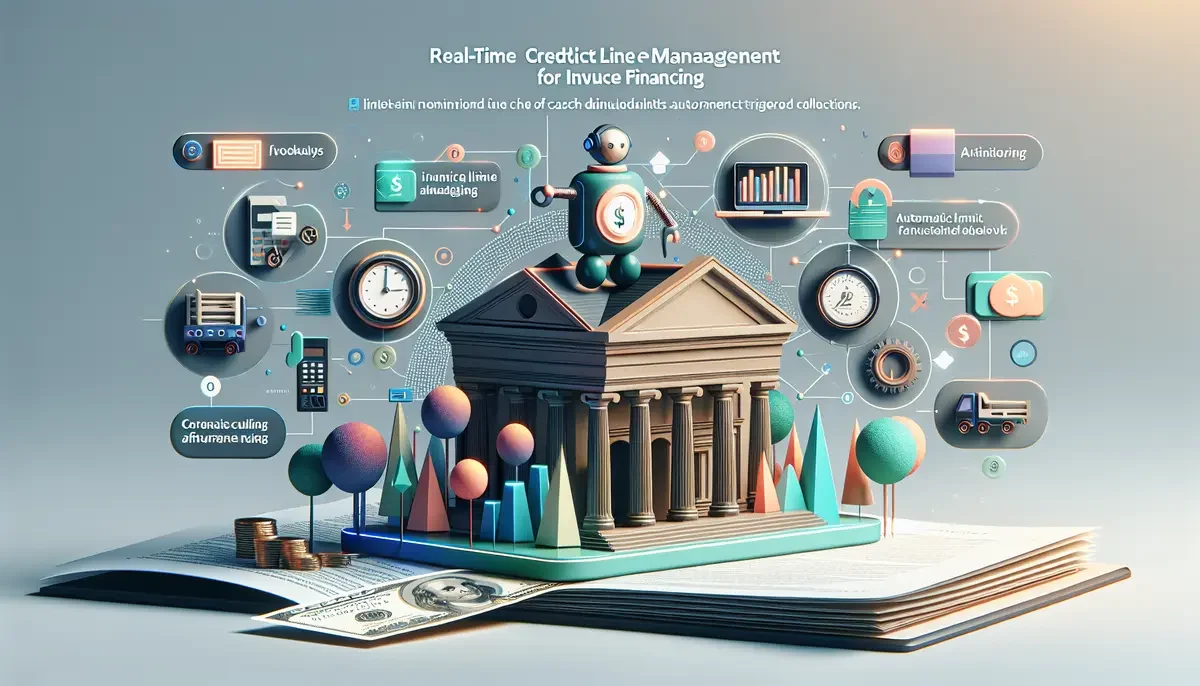
Introduction
Key Takeaways
- No-code AI workflows can provide real-time cash visibility, dynamically adjust credit limits, and automate collections to reduce DSO.
- Integrating accounting, CRM, and AR tools eliminates data silos, improves forecasting accuracy, and lowers financing costs.
- Practical workflows can be implemented quickly on platforms like Zapier, Make, and n8n—without heavy engineering.
Small and medium-sized businesses (SMBs) increasingly rely on invoice financing to bridge cash flow gaps caused by delayed customer payments. However, traditional credit line management is often manual, slow, and error-prone, leaving SMBs exposed to liquidity risks and missed growth opportunities. Recent advances in no-code AI workflows are transforming how SMBs monitor cash flow, dynamically adjust credit limits, and automate collections, offering unprecedented agility and control, as outlined in Billtrust’s invoice finance overview.
This article synthesizes the latest academic, industry, and community insights from the past year to highlight the core pain points SMBs face in invoice financing and presents actionable, research-backed solutions. Each section identifies a key challenge and provides practical tools or workflow examples, ensuring SMB owners and automation professionals can implement improvements immediately.
SMB Pain Point: Manual Cash Flow Monitoring and Forecasting
Many SMBs struggle with real-time visibility into their cash position due to fragmented systems and manual reconciliation. This lack of transparency increases the risk of overdrafts, missed payments, and suboptimal use of working capital.
Actionable Solution: Modern AR automation platforms, such as Billtrust and Upflow, offer real-time dashboards that aggregate invoice status, payment timelines, and cash flow forecasts. These platforms use AI to match incoming payments with outstanding invoices, providing up-to-the-minute clarity and reducing manual workload, as detailed in Upflow’s invoice financing guide.
Workflow Example: Implement a no-code integration between your accounting software and an AR automation platform to automatically update cash flow projections as invoices are issued and paid. This enables proactive financial decision-making and reduces reliance on external financing.
SMB Pain Point: Delayed Access to Working Capital
Extended payment terms and slow collections can leave SMBs unable to cover payroll or invest in growth, especially when large contracts are involved. Traditional invoice financing solutions often require lengthy approval processes and manual intervention.
Actionable Solution: Real-time factoring platforms now leverage low-code and AI-driven workflows to process and finance receivables instantly. These systems assess creditworthiness, verify invoices, and release funds within hours, minimizing cash flow disruptions.
Workflow Example: Use a no-code tool to trigger automatic funding requests as soon as invoices are approved in your ERP, ensuring continuous access to working capital without manual bottlenecks.
SMB Pain Point: Static Credit Limits and Missed Opportunities
Fixed credit lines can constrain SMB growth, especially when business volume fluctuates or new opportunities arise. Manual reviews of credit limits are infrequent and may not reflect real-time risk or opportunity.
Actionable Solution: AI-powered credit management modules analyze payment histories, customer risk profiles, and cash flow trends to dynamically adjust credit limits. This ensures businesses can seize new opportunities without overextending themselves.
Workflow Example: Set up a no-code workflow that reviews customer payment data weekly and automatically proposes credit line adjustments, subject to management approval.
SMB Pain Point: Inefficient Collections and High DSO
Manual collections processes are time-consuming and often ineffective, leading to high Days Sales Outstanding (DSO) and increased reliance on costly financing.
Actionable Solution: Automated collections workflows use AI to identify at-risk invoices, prioritize outreach, and trigger personalized reminders across multiple channels. This reduces overdue receivables and improves cash flow predictability.
Workflow Example: Deploy a no-code automation that sends escalating reminders based on invoice age and customer risk, integrating with email, SMS, and customer portals.
SMB Pain Point: Lack of Integration and Data Silos
Disconnected financial systems create data silos, making it difficult to gain a holistic view of credit, collections, and cash flow. This fragmentation leads to errors and missed insights.
Actionable Solution: No-code integration platforms (e.g., Zapier, Make) enable SMBs to connect accounting, CRM, and AR systems without custom development. Unified data flows support more accurate credit decisions and faster collections.
Workflow Example: Build a workflow that syncs invoice status and payment updates across all platforms, triggering alerts for overdue accounts and updating cash flow forecasts in real time.
SMB Pain Point: High Cost of Traditional Invoice Financing
Invoice financing often comes with significant fees, reducing profit margins and making it less attractive for ongoing use. SMBs need alternatives that accelerate cash flow without recurring costs.
Actionable Solution: AR automation platforms reduce DSO and improve cash flow at a fraction of the cost of invoice financing. By streamlining invoicing, payments, and collections, these tools help SMBs minimize reliance on external funding.
Workflow Example: Implement automated early payment incentives and self-service payment portals to encourage faster customer payments and reduce financing needs.
SMB Pain Point: Limited Access to Analytics and Decision Support
Many SMBs lack the advanced analytics needed to optimize credit line usage, forecast cash flow, and identify at-risk accounts. This limits strategic planning and increases financial uncertainty.
Actionable Solution: Modern platforms provide customizable dashboards and AI-driven insights, enabling SMBs to track KPIs, model scenarios, and make data-driven decisions.
Workflow Example: Use a no-code dashboard builder to visualize real-time cash flow, credit utilization, and collections performance, supporting proactive management.
Community Insights: No-Code Automation in Practice
Recent discussions in automation-focused communities (e.g., r/automation, r/indiehackers) highlight a surge in SMB adoption of no-code tools for financial operations. Users report significant time savings and error reduction by automating repetitive tasks such as invoice tracking, payment reminders, and credit reviews.
Actionable Solution: Leverage community-shared templates and workflow recipes to accelerate implementation. Many SMBs start with simple automations—like syncing invoice data to Google Sheets or triggering Slack alerts for overdue payments—before scaling to more complex, AI-driven processes.
Workflow Example: Adopt a community-vetted Zapier workflow that monitors new invoices, updates a central dashboard, and triggers follow-up actions based on payment status.
Conclusion
Real-time credit line management for invoice financing is now within reach for SMBs, thanks to advances in no-code AI workflows and automation platforms. By addressing core pain points—manual monitoring, delayed funding, static credit limits, inefficient collections, data silos, high costs, and limited analytics—SMBs can unlock faster growth, improved cash flow, and greater financial resilience. The actionable solutions and workflow examples presented here empower SMB owners and automation professionals to modernize their financial operations with minimal technical overhead. For more automation playbooks and case studies, visit our blog.
Ready to see how AlterFlow AI can transform your workflows?
Book a free consultation today.
References
Sources cited in this article.
Related Posts
Building Privacy-Compliant RAG Assistants for Canadian SMBs
Introduction Retrieval-Augmented Generation (RAG) systems combine large language models with your own documents and databases to deliver contextually accurate, grounded answers while minimizing exposu
How to Measure ROI for AI Automation Projects in SMBs
Introduction Small and mid-sized businesses (SMBs) are increasingly turning to AI automation to streamline operations, cut costs, and drive growth. To justify these investments and guide future strate