


The AI-native CRM
built for industrial & safety
equipment distributors
Your customers are not companies. They are departments, fleets and due dates. Every general purpose CRM flattens that into one company and one contact, and your reps quietly stop using it.
- Departments and equipment inside one account
- Service cadences that schedule themselves
- Capture that works at zero bars
City of Brambury
Municipality · 3 departments · 4 contacts
3
Departments
362
Units held
4
Contacts
- Fire ServicesChief D. Halloran84 SCBA · 96 turnout
- Water TreatmentJ. Whitcombe22 gas monitors
- Public WorksA. Cormier140 extinguishers
Three departments, three budgets, three contacts. One account.
Built for the book you actually carry
If your customers look like these, the system already speaks your language. Every one of them appears in the sample records running on this page.
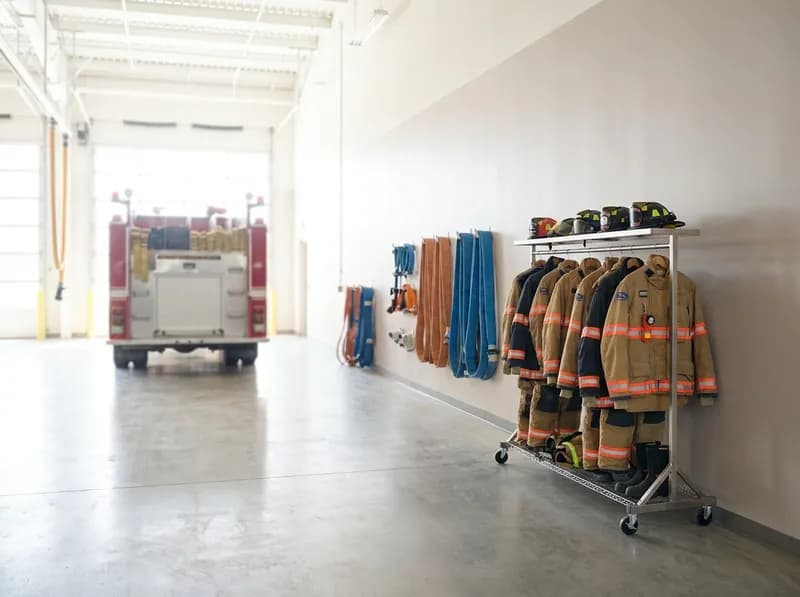
Municipalities
Fire, water treatment and public works in one account, each with its own budget and its own safety contact.

Volunteer fire departments
Nobody at the hall during the day, a chief who answers after six, and a replacement cycle creeping up quietly.
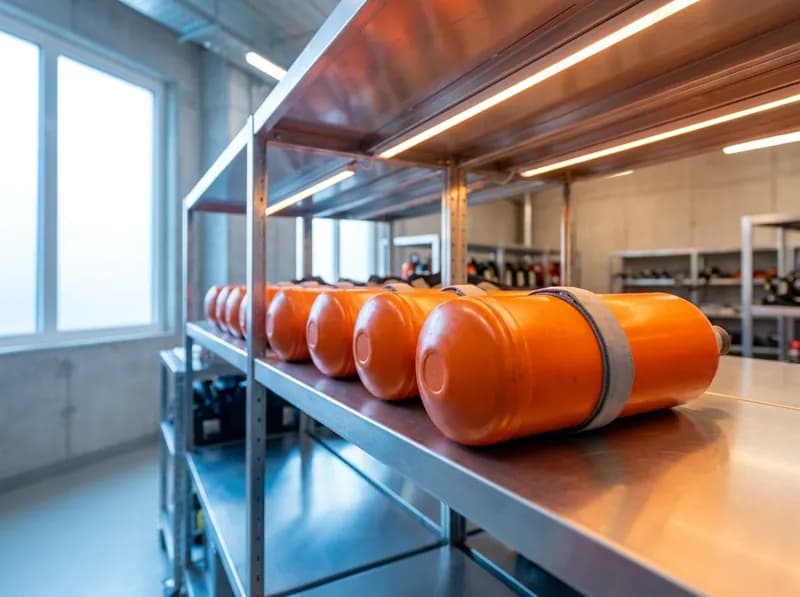
Mines and their ERTs
Self rescuers by the hundred, rescue SCBA on a six month clock, and site visits three levels below any signal.
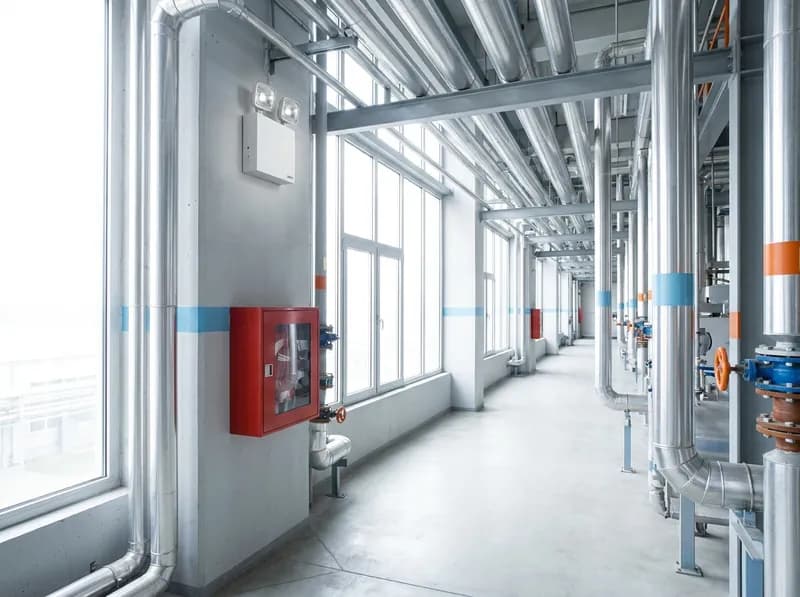
Mills and heavy industry
Fixed gas heads on bump schedules, PAPR for the dusty floors, emergency lighting on annual load tests.

Contractors
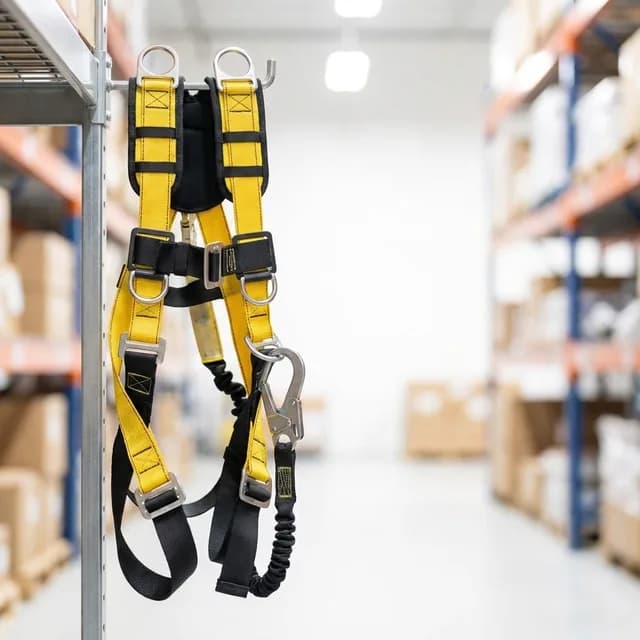
Two hundred harnesses spread across crews that move sites every week, and every one of them on an annual.
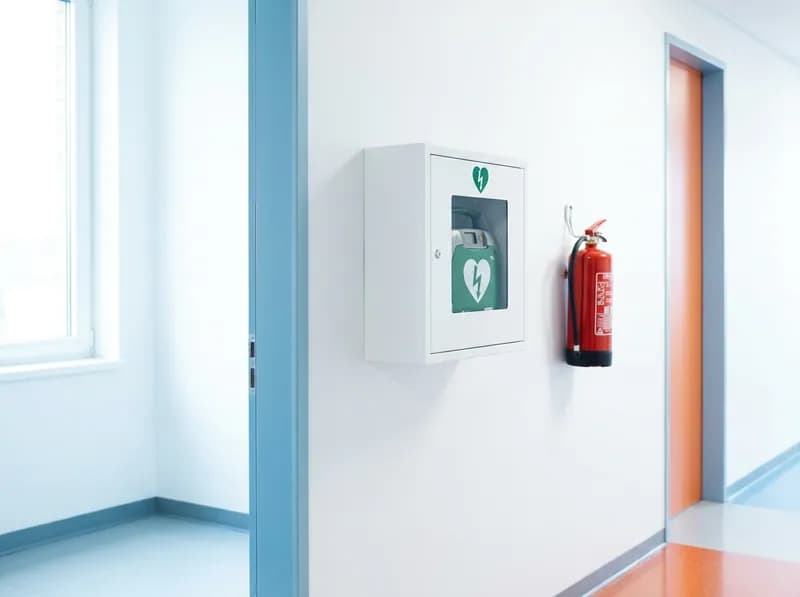
Airports and healthcare
ARFF proximity gear on one ramp, three hundred extinguisher cabinets down the hall, AED pads with expiry dates.
Your next few years of revenue are already sitting on your customers' shelves
A breathing apparatus fleet bought in one year is a large order in another. The only question is whether you are the one who calls first. Drag the year and watch accounts promote themselves, with nobody typing anything in.
10
Accounts with a live replacement
566
Units reaching end of service life
9
Warming up behind them
What the system would put in front of a rep
- City of Brambury140 units
Fire extinguishers, 140 units in since 2013
Rita O. · Northern region
- Dunmore Fabrication120 units
Fall protection, 120 units in since 2015
Priya N. · Western region
- Blackpine Sawmill94 units
Emergency lighting, 60 units in since 2016
Priya N. · Western region
- Harlowe Steel48 units
Gas detection, 48 units in since 2019
Rita O. · Northern region
- Rivelin Paper42 units
Gas detection, 42 units in since 2019
Tom B. · Eastern region
- Frontier Rail Yard40 units
Fall protection, 40 units in since 2016
Rita O. · Northern region
- Norwood Pulp and Paper28 units
SCBA, 28 units in since 2011
Rita O. · Northern region
- Loon Narrows Fire Department22 units
Turnout gear, 22 units in since 2014
Rita O. · Northern region
- Pinecrest Volunteer Fire Department16 units
SCBA, 16 units in since 2010
Rita O. · Northern region
- Bracken Head Fire Department16 units
Turnout gear, 16 units in since 2015
Tom B. · Eastern region
Nobody entered an opportunity to make any of that appear. It came out of equipment records your reps captured on ordinary visits, projected against ordinary service life. A CRM that stores companies, contacts and deals has nowhere to put the one thing that tells you who to call next year.
The problem starts at the customer record
Before anything about features, there is a modelling question. Get it wrong and every screen after it is wrong too. Switch between the two and watch what a flat record throws away.
City of Brambury
1 company · 1 contact
Notes
also water treatment has 22 gas monitors due quarterly, ask Whitcombe. public works extinguishers 6yr coming up. fire side has the compressor + 84 SCBA 2019. Cormier is the one for PW not Halloran
The entire business lives in a text box that nothing can read, schedule, or act on.
What that costs you
- Three departments collapse into one company record
- Four contacts with different budgets look like one buying centre
- Nothing holds the equipment, so nothing knows what is due
- The rep types the real structure into a notes field, once, and never again
A book you can ask questions of
The record you just watched take shape holds every conversation, quote and service date. The point of holding them is what comes next: your people ask for what they need in plain words, and the answer comes back from your own records.
Walk in knowing the whole story
Ask about a customer on the drive over and get the whole picture in one answer: the last conversation, the open quote, the unit due for service next month, the complaint from two winters ago. Your best rep does this from memory for fifty accounts. This does it for every account in the book.
Your history comes with you
We have moved a dealer catalogue of roughly seven thousand parts and a decade of sales correspondence into a modern system, starting from nothing fancier than the exports an ageing platform will give you. The payoff lands on a new hire's first day: they start with the company's whole memory instead of an empty screen.
When it does not know, it says so
An answer is only worth something if you can act on it in front of a customer. So answers come from your records, and when the record does not hold the answer, it says so instead of guessing. And nothing reaches a customer until one of your people presses send.
Which parts of this are AI and which are plain rules is a fair question. It has a straight answer in the FAQ at the bottom of this page.
Drive it yourself
Four surfaces from the system, running here with invented sample data. No sign up, no sales call first. Click anything.
Ask who owns what, and where, and get the answer in one click
Filter the whole book by territory or by equipment category. Every site opens to its departments, its contacts and the units they hold.
Territory views and equipment filtering run in a production build
All equipment
42 sites · 5,643 units
City of Brambury
BramburyMunicipalityRita O.
3 departments
Fire Services
Chief D. Halloran, Fire Chief · M. Trest, Health and Safety
- SCBA 30 minute cylinder, integrated telemetry84
- Turnout gear Structural coat and pant, 4 station fleet96
- Breathing air compressor Station fill panel, air quality sampling2
Water Treatment
J. Whitcombe, Plant Supervisor
- Gas detection 4 gas portable, docked calibration22
- Fall protection Harness and SRL, confined space entry18
Public Works
A. Cormier, Operations Manager
- Fire extinguishers Fleet and facility, 6 year maintenance due140
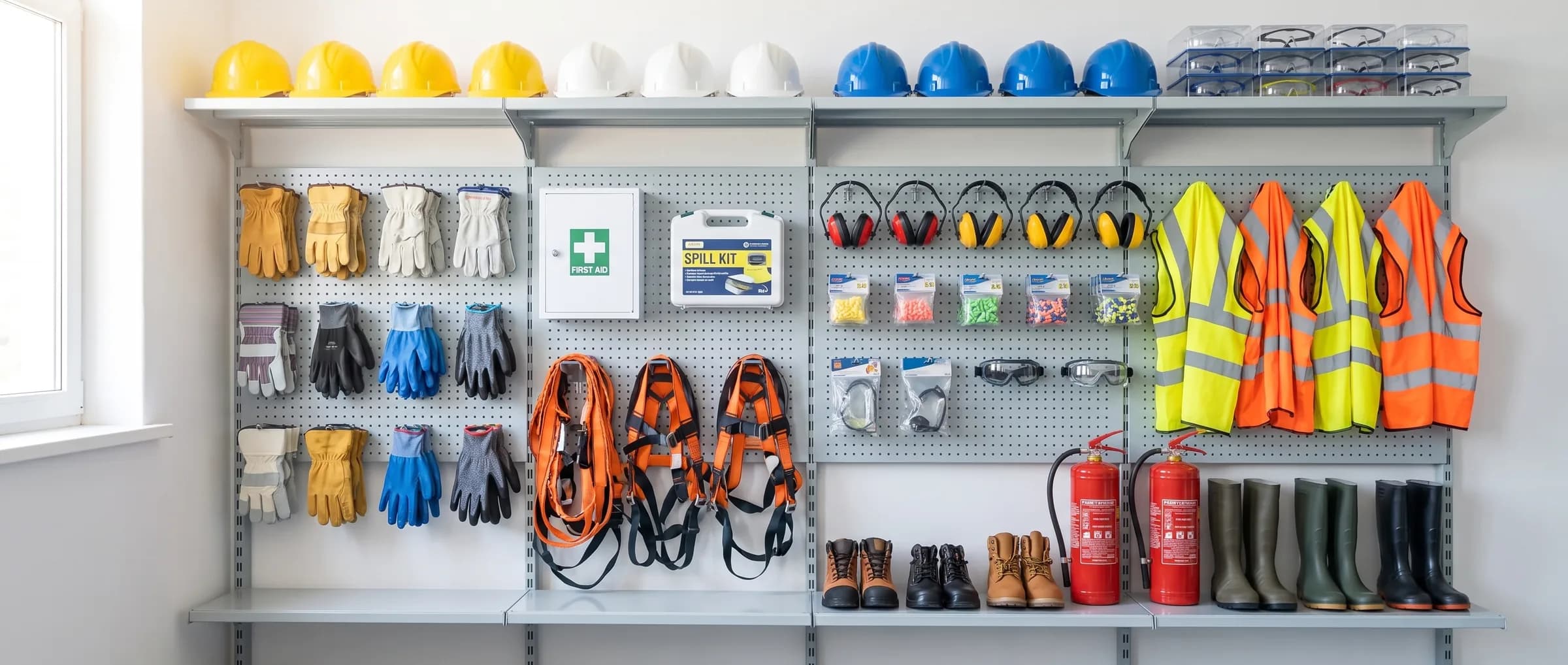
Every shelf like this is a book of due dates.
A day on the system, hour by hour
The demo above shows the surfaces one at a time. This is how they chain together once a territory runs on them.
The day arrives ranked
Overdue first, weighted by what the deal is worth. The list was assembled overnight from the outcomes logged yesterday.
Four visits, one sensible route
The day's stops ordered against real road distances, not straight lines drawn across a map.
Level 3, zero bars
The note is captured anyway, held on the device, and delivered exactly once when a network appears.
The follow up writes itself
Log the outcome and the next date exists before the truck leaves the yard. A miss stays visible until someone deals with it.
Every step above runs in the production build of the sales CRM today. The service and inspection module is not part of this day, because it is not built yet.
Twelve realities of this industry, and what each one forces a system to do
This is the difference between a firm that has sat with your technicians and a firm that has read your website. Open any of them.
A volunteer hall has no one at a desk during the day. The chief is at another job until the evening, and a call at two in the afternoon reaches nobody, every time.
So the system has to: Contact windows belong on the record. A follow-up scheduled for Tuesday at 10am is a follow-up that will be missed and then logged as no answer.
Three modules, and an honest label on each
An industrial & safety business is sales and service in one relationship, with stock underneath both. Here is what runs today, what exists as a working prototype, and what is designed but not yet built. We would rather be straight about that than let you find out later.
Production build, in delivery. Built, covered by an automated proof suite that runs on every change, and being deployed to a live team.
- Organization, department and contact hierarchy, with equipment held at the department that owns it
- Territory ownership, per rep books, and isolation between them enforced in the database itself
- Capture in the field that works with no signal, holds on the device, and arrives exactly once
- Follow-up regeneration, so logging an outcome creates the next date and a miss stays visible
- Manager views ranked by deal value rather than by whoever shouts loudest
- Quote records with partial wins captured against what was actually ordered, and the reason for the gap
- Route planning across a day of visits, optimised against real road distances rather than straight lines
- Plain language search across the book, so a rep can ask for what they want instead of building a filter
- Nothing reaches a customer until one of your people presses send, and consent is re-checked at that moment
- Audit trail with a record of who acted, including when one person acted on another's behalf
Built to attach to what you already run
Nobody replaces four systems on a Monday. The job is to become the layer they connect to, so the retyping between them stops.
Your accounting and ERP
Quoting and invoicing usually belong where they already are. The CRM holds the quote, its value and its outcome, and hands the rest back rather than trying to replace a finance system mid flight.
Getting your data out of wherever it is now
Most of these migrations start as a spreadsheet export, because that is what an ageing system will give you. We have moved a dealer catalogue of roughly seven thousand parts and a decade of sales correspondence into a modern system that way. Column mapping, duplicate handling, a report on every row that failed, and a one click reversal if the whole import was wrong.
Email, including shared mailboxes
Bounded sync rather than swallowing years of history. Mail sent through the system records the person who sent it, even when three people share one inbox.
Inventory and product data
Supplier price lists arrive as spreadsheets. They get read, compared against what you hold, and shown to a human for approval before anything changes.
You see it working before you commit to it
The expensive failure in this industry is a system bought on a demo and abandoned in month four. Everything below is arranged to make that failure visible early, while it is still cheap.
Two days in your building
Not a questionnaire. We sit with the reps, the counter, the sales support desk and the service side, and watch the work happen. Most of what matters has never been written down.
A clickable prototype before a contract
You get something on a screen you can drive, with your own shape of data in it, while the decision is still open. It is the cheapest possible moment to find out we understood you wrongly.
Build in slices, each one usable
The first release does a real job for a real person. Nothing waits on a big launch date, and priorities can change between slices without restarting anything.
Land it with the people who resisted last time
Adoption is the design constraint. A system the field will not open is a system that failed, no matter how correct it is underneath.
The boring parts, which are the ones that get you audited
Territory data is the most political data in a distributor. These are not settings we added because a checklist asked for them.
A rep sees their own book, and only their own book
Isolation between reps is enforced in the database itself, not by hiding a button in the interface. It is covered by automated proofs that run on every single change we make.
Everything leaves a trail
Who changed what, and when. Records are deactivated rather than deleted, deletion is restricted, and bulk export is an administrator action. All of it exists because these things have gone wrong at real companies.
Sign in works for staff without an email address
Plenty of counter and service people have no personal mailbox and no company phone. Authentication that assumes both is authentication that locks out a third of your team.
You own it
Source code included. Hosted wherever you want it, including your own infrastructure. No lock-in dressed up as a platform.
The questions that actually come up
We already spent real money on a CRM that is only half finished. Why would this be different?
Because the reason it stalled is usually not the software, it is that the system models a generic sales process and your business is not one. Configuring a general purpose product to understand departments inside an account, equipment with cadences, and quotes written by someone other than the rep is where those projects die. We start from your shape instead of bending a product into it. And we show you a working prototype before you commit, so you can judge that claim rather than take it.
Is what I am clicking on this page the real system?
It is a faithful recreation, running in your browser on invented records. The surfaces match what we drive on a live walkthrough, and each one carries a label stating which part runs in a production build today and which does not. The fastest way to see the real thing end to end is a call where you bring your messiest workflow and we drive it together.
How much of the intelligence is AI, and how much is rules?
Here is the split, because it matters. The assistant that answers questions about a customer is AI, and it exists today as a working prototype we demo live, not as a production deployment. The follow-up loop and the morning numbers are plain rules that run the same way every time, on purpose: a missed follow-up has to surface every single time, not probably. And neither one sends anything to a customer by itself. A person presses send, every time. If a vendor will not give you this split about their own product, that is worth noticing.
Is the layout changeable if we do not like how it is arranged?
Yes, and more than that, it is expected. It is your system. Screens, fields, stage names, taxonomies and reports are yours to change, and the ones your team will want to change most are configurable rather than requiring us.
Can leads be assigned to a territory automatically?
Territories, per rep books and filtering by territory are running now. Assignment happening by itself the moment a lead is created is something we build as part of an engagement rather than a switch already wired in the shipped system, so we are calling it what it is.
Can it connect to the systems we already run?
That is normally the point. Most of these businesses have accounting in one place, stock in another and email everywhere, and the value is in becoming the layer they attach to. To be precise about what we have actually done: we have built mail integration with a human approval step, and we have moved large catalogues and years of sales history in from exports. A direct live connection into a legacy inventory platform is work we scope per engagement, not something already built and waiting.
Could you build the inventory side too, not just the CRM?
Yes, and here is exactly where that stands so you can judge it rather than take our word. A product catalogue with real search and a bulk import pipeline runs in production today for a dealer in another industry. A customer portal with per-customer pricing, vendor purchase orders that draft themselves, and shipping that produces the invoice and the notification in one action exists as a working prototype we have demoed, not as a live deployment. We would build the industrial & safety version with you, and we would keep being this specific about status the whole way through.
Do you handle inspections and service, or only sales?
Sales is what runs today. The service and inspection side is specified in real depth, mapped on site with technicians, down to cadences, prescribed forms, certificates and dispatch, and it is not built yet. We would rather say that plainly than let you assume otherwise and find out later.
We are a small team. Is this too much system for us?
Team size is not the thing that decides it. What decides it is whether your business has structure a general product cannot hold, departments inside accounts, equipment on cadences, service and sales in one relationship. A nine person company with that shape gets more out of a system built around it than a hundred person company without it.
How long before we see something real?
A prototype you can click, shaped around your business, in weeks rather than quarters. Whether that turns into a build is a separate decision you make afterwards.
Tell us the part of your week everyone complains about
Bring the workflow that keeps breaking. We will walk your team through the system, and if we are not the right answer for you we will say so on that call rather than three meetings later.
Every record shown on this page is invented sample data. We never show one client's business to another.