

The AI-native CRM
built for industrial & MRO
distributors
Your customers are not companies. They are departments, fleets and due dates. Every general purpose CRM flattens that into one company and one contact, and your reps quietly stop using it.
- Departments and equipment inside one account
- Service and renewal dates that remind reps
- Capture that works at zero bars
The CRM in action, and the full film
An animated tour of the CRM, shown with sample data: one customer account opening into its departments, a morning list that also arrives by email, every customer on a map with a brief for each, a route planned by optimizing the order of stops, a search that finds customers, contacts, deals and quotes as you type, an assistant that answers from your own records, a voice note written up for you to confirm, a note that waits on the phone with no signal and uploads when it returns, a pipeline board with a deal dragged into the next stage, a quote's lines read from its PDF and checked against its total, equipment with its service dates and the customer's reminder drafted for the rep to approve, customer emails landing on the customer's record, each rep's own book with the owner seeing all and the rep told when sales support updates an account, a business card photographed at a trade show and read into that show's list, a feedback request that moves from Received to In progress to Shipped, and the team's own pipeline stages and territories, with a link to book a walkthrough.
The CRM, running on sample data. The film has sound.
Running today for a national safety distributor.
No territory disputes since it went live.
- Every email with a customer lands on that customer's record, with no filing.
- A customer whose quote has gone quiet is back on the rep's list every morning until someone follows up.
- Reps log visits by voice from the truck, check the transcript, and confirm.
We never show one client's business to another.
The problem starts at the customer record
Before anything about features, there is a modelling question. Get it wrong and every screen after it is wrong too. Switch between the two and watch what a flat record throws away.
City of Brambury
1 company · 1 contact
Notes
also water treatment has 22 gas monitors due quarterly, ask Whitcombe. public works extinguishers 6yr coming up. fire side has the compressor + 84 SCBA 2019. Cormier is the one for PW not Halloran
The entire business lives in a text box that nothing can read, schedule, or act on.
What that costs you
- Three departments collapse into one company record
- Four contacts with different budgets look like one buying centre
- Nothing holds the equipment, so nothing knows what is due
- The rep types the real structure into a notes field, once, and never again
A book you can ask questions of
The record you just watched take shape holds every conversation, quote and service date. The point of holding them is what comes next: your people ask for what they need in plain words, and the answer comes back from your own records.
Walk in knowing the whole story
Ask about a customer on the drive over and get an answer from what is recorded: the visits, the calls, the notes, the open deal and the quotes sent, each with a link to where it came from. Your best rep does this from memory for fifty accounts. This does it for every account in the book.
Your history comes with you
The visits, calls, notes, deals and sent quotes your people record stay on the customer's record, and the assistant answers from them. The payoff lands on a new hire's first day: they start with the company's whole memory instead of an empty screen.
When it does not know, it says so
An answer is only worth something if you can act on it in front of a customer. So answers come from your records, and when the record does not hold the answer, it says so instead of guessing. And nothing reaches a customer until one of your people approves it.
Which parts of this are AI and which are plain rules is a fair question. It has a straight answer in the FAQ at the bottom of this page.
Drive it yourself
Four surfaces from the system, running here with invented sample data. No sign up, no sales call first. Click anything.
Ask who owns what, and where, and get the answer in one click
Filter the whole book on the map by territory, overdue follow-up or days since the last visit. Every site opens to its departments, its contacts and the equipment they hold.
Runs in production today: the territory map and its filters
All equipment
42 sites · 6,607 units
City of Brambury
BramburyMunicipalityRita O.
3 departments
Fire Services
Chief D. Halloran, Fire Chief · M. Trest, Health and Safety
- SCBA 30 minute cylinder, integrated telemetry84
- Turnout gear Structural coat and pant, 4 station fleet96
- Breathing air compressor Station fill panel, air quality sampling2
Water Treatment
J. Whitcombe, Plant Supervisor
- Gas detection 4 gas portable, docked calibration22
- Fall protection Harness and SRL, confined space entry18
Public Works
A. Cormier, Operations Manager
- Fire extinguishers Fleet and facility, 6 year maintenance due140
Eight shelves, three different clocks
An MRO catalogue is not one business. A harness comes back because a date says so. A bin of fasteners comes back because it empties. A plumbing job comes back because someone starts building. Those are three different rhythms, and most systems are built for one of them.
A date brings it back
The customer does not get to choose whether this comes around. A regulation does.
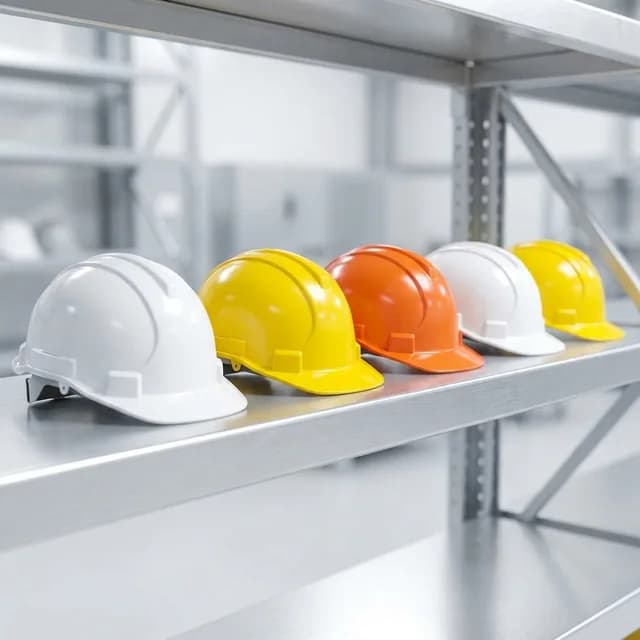
- Safety and PPE
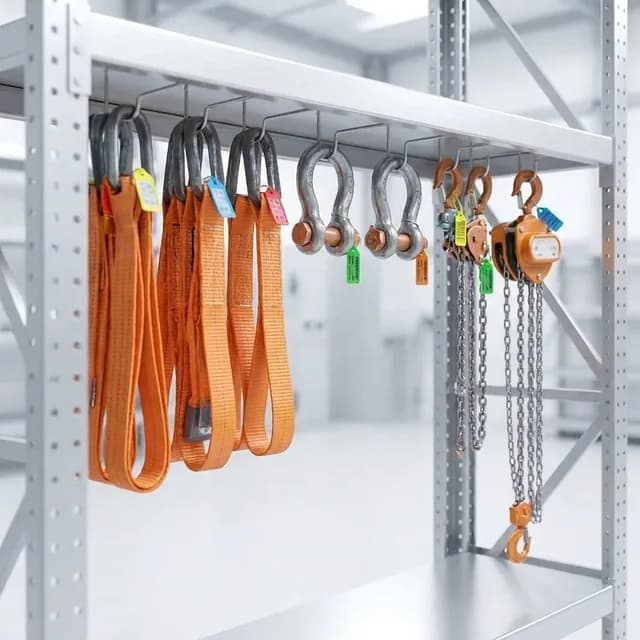
- Material handling
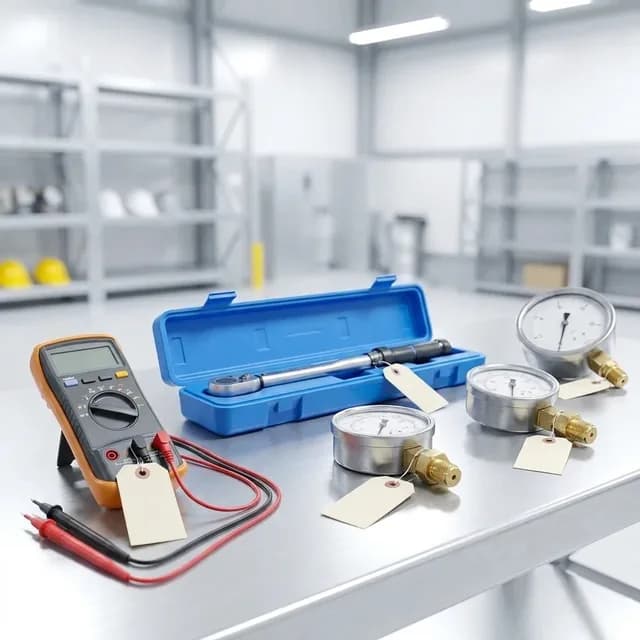
- Tools and equipment
What runs today: Equipment records; service, certification and renewal due dates; reminders to the rep; and customer reminders that a rep approves before they send. The morning list and digest show what is overdue, due today and the service coming due. The full inspection workflow, with prescribed forms and per-unit certificates, is specified and not built yet.
An empty bin brings it back
Nothing expires here. It just runs out, quietly, and usually on the day it matters.
- Fasteners and hardware
- Industrial consumables
- Maintenance and facility supplies
What runs today: The product catalogue and the bulk import pipeline run in production today for a dealer in another industry. Reorder points and managed stock are specified and not built, and we will keep saying so until they are.
A job brings it back
The timing belongs to someone else's schedule, which is exactly why it falls through a pipeline built for one deal.
- Electrical
- Plumbing
What runs today: Quote records against the deal (estimate number, lines, versions and PDF), with lines read off an estimate PDF for the rep to check. Job level takeoffs are specified and not built.
Three clocks, eight shelves, one book. A general purpose CRM models a single deal moving through a single pipeline, which is why the other two clocks end up living in a spreadsheet or in somebody’s memory.
The middle clock has its own product
Consumption does not come back on a date, so it is not the CRM that serves it well. It comes back through a counter that is open when the bin empties, and every quote request and stock enquiry that counter takes is intelligence this CRM should already have.
Who this is for
If your customers look like these, the system already speaks your language. Every one of them appears in the sample records running on this page.
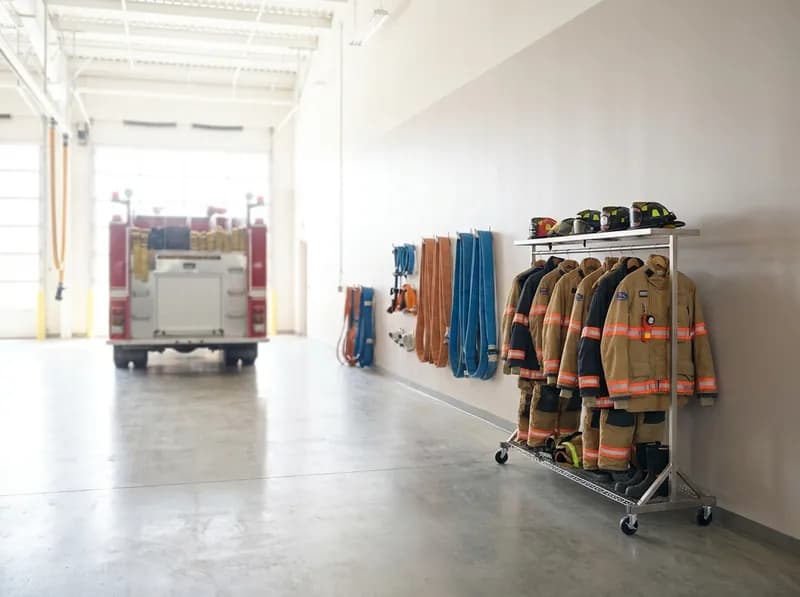
Municipalities
Departments, one accountFire, water treatment and public works in one account, each with its own budget and its own safety contact.

Volunteer fire departments
A chief who answers after sixNobody at the hall during the day, a chief who answers after six, and a replacement cycle creeping up quietly.
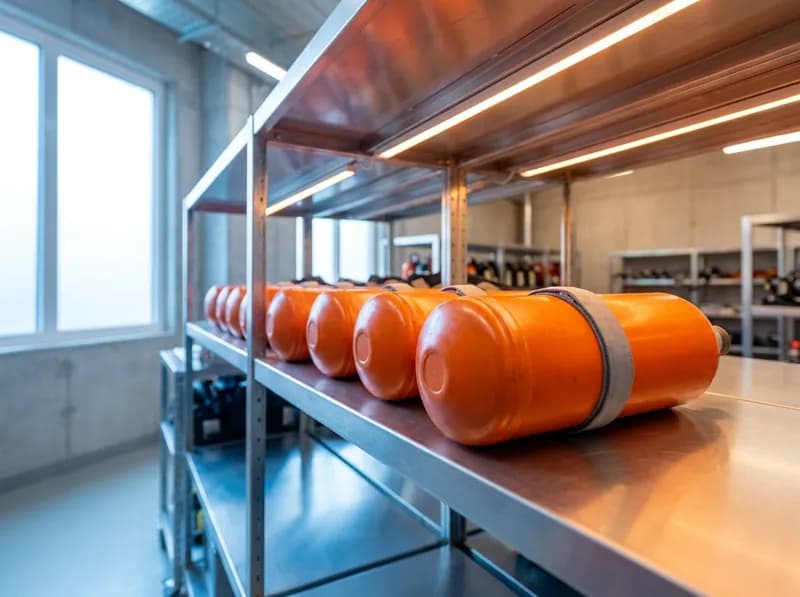
Mines and their ERTs
Self rescuers by the hundredSelf rescuers by the hundred, rescue SCBA on a six month clock, and site visits three levels below any signal.
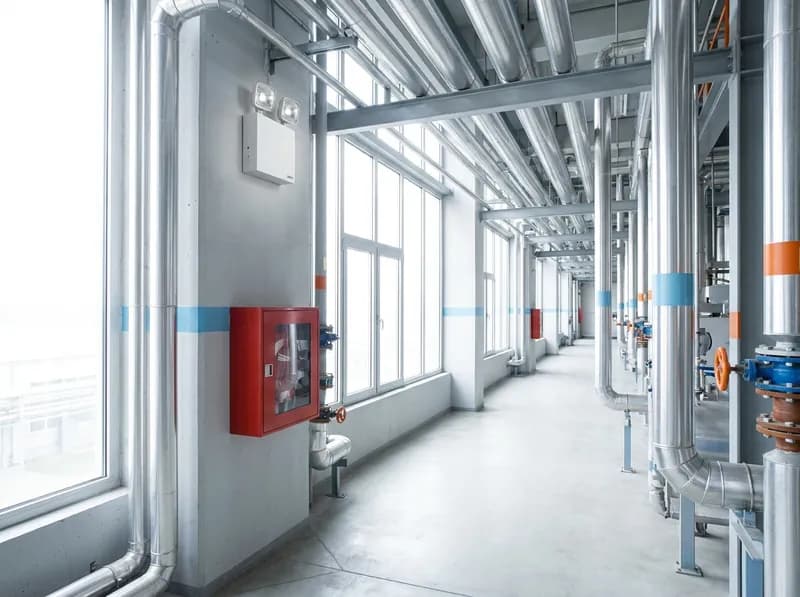
Mills and heavy industry
Hoists, slings and gas headsLifting gear and hoists on periodic inspection, fixed gas heads on bump schedules, and a parts store that never stops consuming.

Contractors
Bins that empty, tools that walkFastener bins that empty without warning, hand tools that walk, and harnesses on an annual across crews that change site every week.
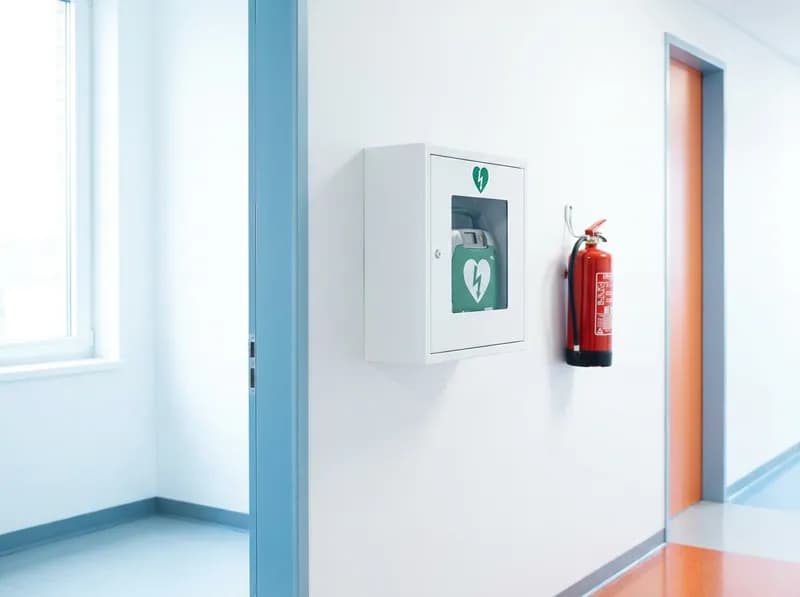
Airports and healthcare
Cabinets and pads that expireARFF proximity gear on one ramp, three hundred extinguisher cabinets down the hall, AED pads with expiry dates.
Your next few years of revenue are already sitting on your customers' shelves
A breathing apparatus fleet bought in one year is a large order in another. The only question is whether you are the one who calls first. Drag the year and watch accounts promote themselves, with nobody typing anything in.
10
Accounts with a live replacement
566
Units reaching end of service life
10
Warming up behind them
What the system would put in front of a rep
- City of Brambury140 units
Fire extinguishers, 140 units in since 2013
Rita O. · Northern region
- Dunmore Fabrication120 units
Fall protection, 120 units in since 2015
Priya N. · Western region
- Blackpine Sawmill94 units
Emergency lighting, 60 units in since 2016
Priya N. · Western region
- Harlowe Steel48 units
Gas detection, 48 units in since 2019
Rita O. · Northern region
- Rivelin Paper42 units
Gas detection, 42 units in since 2019
Tom B. · Eastern region
- Frontier Rail Yard40 units
Fall protection, 40 units in since 2016
Rita O. · Northern region
- Norwood Pulp and Paper28 units
SCBA, 28 units in since 2011
Rita O. · Northern region
- Loon Narrows Fire Department22 units
Turnout gear, 22 units in since 2014
Rita O. · Northern region
- Pinecrest Volunteer Fire Department16 units
SCBA, 16 units in since 2010
Rita O. · Northern region
- Bracken Head Fire Department16 units
Turnout gear, 16 units in since 2015
Tom B. · Eastern region
Nobody entered an opportunity to make any of that appear. It came out of equipment records your reps captured on ordinary visits, projected against ordinary service life. A CRM that stores companies, contacts and deals has nowhere to put the one thing that tells you who to call next year.
Twelve realities of this industry, and what each one forces a system to do
This is the difference between a firm that has sat with your technicians and a firm that has read your website. Open any of them.
A volunteer hall has no one at a desk during the day. The chief is at another job until the evening, and a call at two in the afternoon reaches nobody, every time.
So the system has to: Contact windows belong on the record. A follow-up scheduled for Tuesday at 10am is a follow-up that will be missed and then logged as no answer.
Three modules, and an honest label on each
An industrial & MRO business is sales and service in one relationship, with stock underneath both. Here is what runs today, what exists as a working prototype, and what is designed but not yet built. We would rather be straight about that than let you find out later.
Running in production. Live with a national safety distributor's sales team today, and covered by an automated test suite that runs on every change.
- Organization, department and contact hierarchy, with equipment held at the department that owns it
- Territory ownership, per rep books, and isolation between them enforced in the database itself
- Customer email filed to the customer's timeline without anyone filing it, shared team mailboxes included
- Offline capture of notes and voice notes, sent when signal returns; contacts and history need signal
- Voice notes, transcribed and checked by the rep before anything saves
- Follow-up when a deal has gone quiet, on the rep's list until contact is logged or a dated follow-up is set
- Service, certification and renewal dates on equipment, with a reminder to the rep and a customer reminder drafted for a rep to approve
- Roles: an administrator who can view as any rep (read-only), sales support, and reps
- Quote records kept against the deal, with the estimate number, lines, versions and PDF, and the lines read off an estimate PDF for the rep to check
- Route planning for a day of visits, with total distance and drive time
- An assistant that answers from recorded visits, calls, notes, deals and sent quotes, with a link to the source, and drafts a follow-up for the rep to review
- Nothing reaches a customer until one of your people approves it
Working prototype. Mixed, so here is the split. The product catalogue and the bulk import pipeline run in production today for a dealer in another industry. The customer portal, the automatic vendor purchase orders and the shipping-to-invoice flow exist as a working prototype we have demoed, not as a live deployment. We have not built a direct connection into a legacy inventory platform for anyone yet, and we will not claim otherwise.
- Customer portal with per-customer tier pricing, so the discount a buyer has negotiated is visible to them without an email
- Parts and product catalogue, searchable, grouped by supplier
- Order placed by the customer directly, instead of arriving as an email someone retypes
- Vendor purchase orders drafted automatically when an order needs stock you do not hold, ready for one click approval
- Marking an order shipped generates the packing slip, the invoice and the customer notification in the same moment
- Statements produced on demand for any date range, rather than waiting for a month end batch
- Supplier price list spreadsheets read automatically, with the changes shown for approval before anything updates
- Bulk import that maps your spreadsheet columns, flags duplicates before writing, reports the rows it could not read, and reverses the whole import in one click if it was wrong
In development. Specified in depth on site with the people who do the work, down to the forms and the cadences, and now being built with a small number of design partners.
- Built around a service provider inspecting many customers, not around one customer inspecting itself
- Quarterly, six month, annual and six year cadences running together, with the next date set on sign off
- Prescribed regulatory forms reproduced exactly, with required fields enforced before a submission is accepted
- Per unit certificates and a per visit summary, segmented by department for a scoped audit request
- Scan the tag on the unit, run the checklist, photograph anything that fails
- A failed item becomes a quote, with a clock on getting it out and a clock on chasing the order
- Dispatch for bench and field technicians, replacing a handwritten board
- Every serviceable item sold enrols itself into the schedule, which is where the recurring revenue comes from
Built to attach to what you already run
Nobody replaces four systems on a Monday. The job is to become the layer they connect to, so the retyping between them stops.
Your accounting and ERP
Getting your data out of wherever it is now
Email, including shared mailboxes
Inventory and product data
You do not adapt to the software. It adapts to you
Every distributor in this trade runs differently, and the ones who last have processes worth keeping. Off-the-shelf products ask you to give those up. We map what you already do and build to it, AI-first from the data model up.
Built around your processes, not a template you squeeze into
We map how the business runs first, on site, including the parts nobody has written down. The workflow you already have is the workflow the software follows. Off-the-shelf products make you change to suit them, and the change is where the cost hides.
AI-native, not a tool with AI added on
Built AI-first from the data model up, so the intelligence sits inside the work rather than in a box bolted to the side of it. That is a different thing from a conventional system with an assistant added late, and it shows in what the software can do with what it knows.
Your vocabulary, on every screen
Your product lines, your customer types, your stages, called what your people already call them. A system that renames everything gets worked around within a month, and the workaround becomes the real process.
You see it working before you commit to it
The expensive failure in this industry is a system bought on a demo and abandoned in month four. Everything below is arranged to make that failure visible early, while it is still cheap.
Two days in your building
Not a questionnaire. We sit with the reps, the counter, the sales support desk and the service side, and watch the work happen. Most of what matters has never been written down.
A clickable prototype before a contract
You get something on a screen you can drive, with your own shape of data in it, while the decision is still open. It is the cheapest possible moment to find out we understood you wrongly.
Build in slices, each one usable
The first release does a real job for a real person. Nothing waits on a big launch date, and priorities can change between slices without restarting anything.
Land it with the people who resisted last time
Adoption is the design constraint. A system the field will not open is a system that failed, no matter how correct it is underneath.
The boring parts, which are the ones that get you audited
Territory data is the most political data in a distributor. These are not settings we added because a checklist asked for them.
Each rep sees their book and territory
Everything leaves a trail
Sign in works for staff without an email address
We host it for you
The questions that come up
We already spent real money on a CRM that is only half finished. Why would this be different?
Because the reason it stalled is usually not the software, it is that the system models a generic sales process and your business is not one. Configuring a general purpose product to understand departments inside an account, equipment with cadences, and quotes written by someone other than the rep is where those projects die. We start from your shape instead of bending a product into it. And we show you a working prototype before you commit, so you can judge that claim rather than take it.
Is what I am clicking on this page the real system?
The tour on this page is a recreation, running in your browser on invented records, and each surface carries a label stating which part runs in production today and which does not. The working demo is a demonstration build on sample records, running as a real application; ask for it on the request page and we open it for you. A walkthrough is where you bring your messiest workflow and we drive it together.
How much of the intelligence is AI, and how much is rules?
Here is the split, because it matters. Three things are AI, and all run in production today: the assistant that answers questions about one customer from its recorded visits, calls, notes, deals and quotes, with a link to the source; the voice notes that are transcribed and turned into suggested follow-ups the rep checks; and the reading of lines off an estimate PDF, which the rep checks. The follow-up list and the morning numbers are plain rules that run the same way every time, on purpose: a missed follow-up has to surface every single time, not probably. And none of it sends anything to a customer by itself. A person confirms a voice note, and a person approves every reply and reminder before it goes. If a vendor will not give you this split about their own product, that is worth noticing.
Is the layout changeable if we do not like how it is arranged?
Yes, and more than that, it is expected. Screens, fields, stage names, taxonomies and reports are yours to change, and the ones your team will want to change most are configurable rather than requiring us.
Can leads be assigned to a territory automatically?
Territories, per rep books and filtering by territory are running now. Assignment happening by itself the moment a lead is created is something we build as part of an engagement rather than a switch already wired in the shipped system, so we are calling it what it is.
Can it connect to the systems we already run?
That is normally the point. Most of these businesses have accounting in one place, stock in another and email everywhere, and the value is in becoming the layer they attach to. To be precise about what we have done: we have built mail integration with a human approval step, and we have moved large catalogues and years of sales history in from exports. A direct live connection into a legacy inventory platform is work we scope per engagement, not something already built and waiting.
Could you build the inventory side too, not just the CRM?
Yes, and here is exactly where that stands so you can judge it rather than take our word. A product catalogue with real search and a bulk import pipeline runs in production today for a dealer in another industry. A customer portal with per-customer pricing, vendor purchase orders that draft themselves, and shipping that produces the invoice and the notification in one action exists as a working prototype we have demoed, not as a live deployment. We would build the industrial & MRO version with you, and we would keep being this specific about status the whole way through.
Do you handle inspections and service, or only sales?
Sales runs today, along with service, certification and renewal dates on the equipment, reminders to the rep, and customer reminders drafted for a rep to approve. The full inspection side is specified in real depth, mapped on site with technicians, down to cadences, prescribed forms, certificates and dispatch, and it is not built yet. We would rather say that plainly than let you assume otherwise and find out later.
We are a small team. Is this too much system for us?
Team size is not the thing that decides it. What decides it is whether your business has structure a general product cannot hold, departments inside accounts, equipment on cadences, service and sales in one relationship. A nine person company with that shape gets more out of a system built around it than a hundred person company without it.
How long before we see something real?
A prototype you can click, shaped around your business, in weeks rather than quarters. Whether that turns into a build is a separate decision you make afterwards.
Tell us the part of your week everyone complains about
Bring the workflow that keeps breaking. We will walk your team through the system, and if we are not the right answer for you we will say so on that call rather than three meetings later.
Every record shown on this page is invented sample data. We never show one client's business to another.