
Inspection and recertification for what you sold
Every serviceable thing you sell carries a clock. A harness, a gas detector, an extinguisher, a breathing air compressor. The distributors who own that clock own the revenue attached to it. Most find out the date has passed when the customer rings to ask for a certificate.
In development, and being built with a small number of design partners. If your service book is the part of the business nobody can see, that is the conversation.
Tag read on approach
In developmentFull-body harness
Serial and manufacture date read from the tag · Annual cadence
- Webbing: cuts, fraying, chemical damagepassed
- Stitching: pulled or broken threadsPhotograph attachedfailed
- D-ring: distortion, cracks, corrosionpassed
- Buckles and adjusters: functionpassed
- Labels: legible, in datepassed
- Technician signaturenot yet completed
A failure should become a quote, not a work order
This is the whole difference. An inspection tool records that something failed and hands it to a queue. You are a distributor. You stock the part, you know the price, and you know whose it is. The failure is a sale, and what you sell to close it carries its own next date.
Something serviceable is sold
A harness, a lanyard, a gas detector, an extinguisher. Anything that carries a date rather than being consumed.
It enrols itself the same day
Serial captured at the point of sale, cadence attached, first due date set. Nobody types it into a spreadsheet afterwards, which is where it is lost today.
The date brings it back
The book of work is a calendar, not a memory. Notice goes out well before the date so the visit is scheduled rather than scrambled.
The technician inspects it
Tag scanned, the right form loaded, pass or fail against each item, and a photograph welded to anything that fails.
A failure becomes a quote
Not a work order into a queue. A priced quote, against the part you stock, with a clock on getting it out and a clock on chasing it.
Repairs close it, the certificate issues
The certificate is what the customer came for. It lands when the deficiency is cleared, and the next date is already set.
And then it starts again. The quote is a sale, what it sells is serviceable, and what is serviceable enrols itself. That is the difference between a service department that costs money and one that compounds.
One harness, twelve months, two endings
Nothing here is a disaster. That is the point. Every step is a small, reasonable thing not getting done, and the loss only becomes visible at the end, by which time it reads as normal. Pick a column and follow it.
- The day it sellsA harness goes out on an order. Somebody means to add it to the master spreadsheet later.
- Three months inIt never made the sheet. Nothing is wrong yet, and nothing will look wrong for another nine months.
- Month elevenNo notice goes out, because there is no record to raise one from.
- Month twelveThe customer rings first. They need certificates for an audit next week, and nobody here has a list of what they own.
- The deficiencySomebody writes stitching on a paper form. A quote is meant to follow it out.
- Thirty days laterThe quote never went. The certificate never issued. The replacement gets bought from whoever answered the phone first.
An illustration of the workflow, not a screen from a shipping product. The service and inspection system is in development.
You have already sold most of the work
Every durable line you carry comes back on a date somebody has to own. Fasteners and consumables are not on this list, and never should be: they recur by an empty bin, not by a calendar, and forcing them in would make the whole argument dishonest.
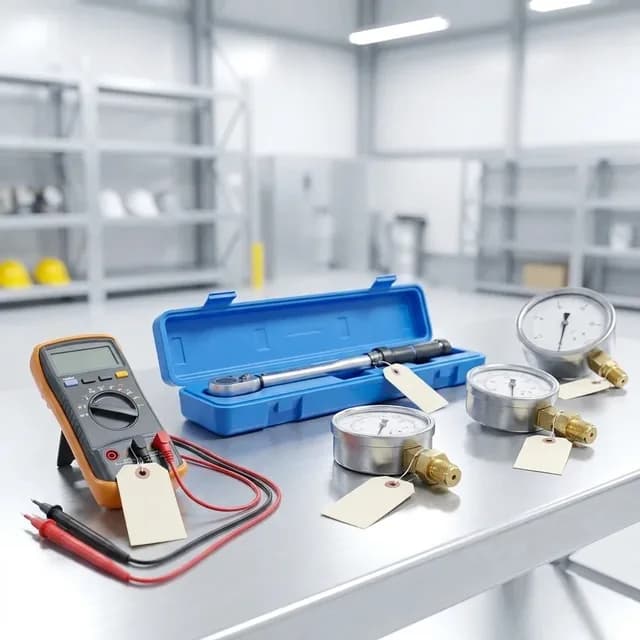 Quarterly to annualTest instrumentsCalibration drifts whether or not anyone is watching, and a reading nobody can defend is worse than no reading.
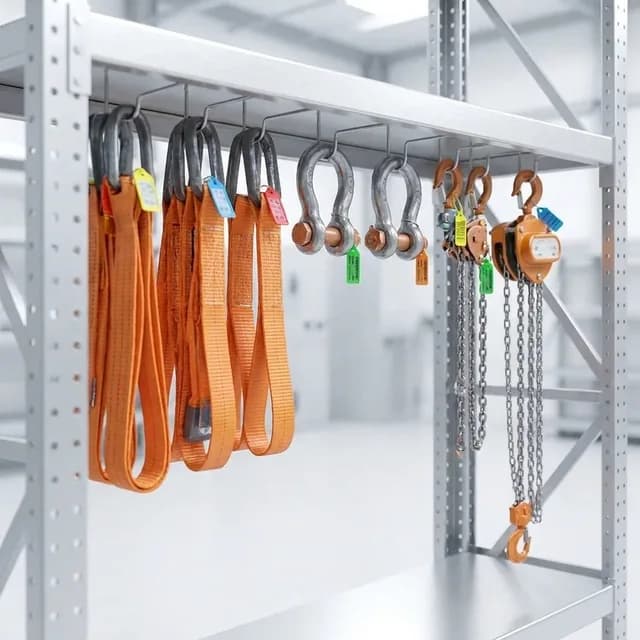 Six-monthly to annualLifting and riggingEvery sling, shackle and anchor point is inspected on a cycle, and each one is its own record with its own history.
 Annual, six-year, twelve-yearExtinguishers and suppressionAn annual check, an internal examination years later, and a hydrostatic test years after that. Three clocks on one unit.
 Annual, plus pre-useHeight safety and PPEA harness is condemned on the stitching, not on its age. Which means somebody has to look at it, and prove they did.
Three kinds of software touch this, and each is missing a different piece
This is not a feature gap you can settle with a longer requirements list. Each of these is built around a different idea of who is doing the inspecting, and that decision reaches all the way down into the data.
| What it is | What it knows | What it cannot do for you |
|---|---|---|
| Maintenance software for a plant | One company's own assets | The wrong shape entirely. You inspect other people's equipment, across hundreds of customers, on cadences they each choose. |
| Inspection software for a service company | Many customers' assets | Nothing about your catalogue, your pricing or who bought what. A failure becomes a work order, not a quote. |
| Your ERP | What you sold, and to whom | No prescribed forms, no tag scanning, nothing a technician can hold in one hand in front of a customer. |
A distributor that both sells the equipment and services it sits across all three. That is an unusual shape, and it is the reason this work still runs on a spreadsheet and a whiteboard in most of the trade.
Five hundred units, one week, and every one of them answerable
A single site can hold five or six hundred serviceable items. The work is repetitive by nature, so the only thing that matters is how few seconds each unit takes and how little of it can be fudged.
- The tag is read on approachThe unit identifies itself: serial, manufacture date, cadence, history. Nobody types a serial number four hundred times, and nobody transposes one.
- The right form loads itselfPrescribed forms reproduced exactly, because on a regulated inspection the report has to be that report. The site's other work loads with it, so one visit is one screen.
- A failure carries its evidenceA photograph and a reason, welded to the unit that failed. It is what makes the deficiency defensible, and it is what gets the customer's replacement budget approved.
- It will not submit half-finishedRequired fields are enforced before sign-off, and the technician signs. This is the specific fix for a report that gets copied forward from last year with half the boxes untouched.
Tag read on approach
In developmentFull-body harness
Serial and manufacture date read from the tag · Annual cadence
- Webbing: cuts, fraying, chemical damagepassed
- Stitching: pulled or broken threadsPhotograph attachedfailed
- D-ring: distortion, cracks, corrosionpassed
- Buckles and adjusters: functionpassed
- Labels: legible, in datepassed
- Technician signaturenot yet completed
The certificate is the thing they are actually buying
Nobody is buying an inspection. They are buying the ability to answer one question, months later, about one piece of equipment, in front of somebody official.
A certificate for every unit
One document per serial, not one document per visit. Because the question is never asked about the visit.
When something happens and an inspector pulls one harness off one worker, the question is whether that unit was inspected. A visit summary cannot answer it.
A summary for the site
Description, serial, date inspected, date next due. Every unit on one sheet, exportable.
It doubles as the customer's own inventory. Most of them do not have one, which is why the conversation about what else they own starts here.
Scoped to one department
A supervisor with sixty units does not want the four hundred belonging to the rest of the site.
Large sites split their equipment across departments that are audited separately. Reports that cannot be scoped get re-cut by hand, every time.
Evidence attached to the failure
A photograph and a reason against the unit that failed, in the record the customer keeps.
It is also how their replacement budget gets approved. Proof beats an assertion that something was worn out.
Four clocks, running at once, on the same site
Cadences do not line up, and they are not all set by the same authority. Some come from regulation, some from the standard that governs the equipment, some from the fire code, and some are simply what the customer asked for. A system that models one interval and repeats it does not survive contact with a real book.
Quarterly
Gas detection on a service contract
Chosen by the customer
Six-monthly
Breathing air quality analysis
Regulation
Annual
Harnesses, lanyards, anchor points
The governing standard
Six-year
Extinguisher internal examination
Code
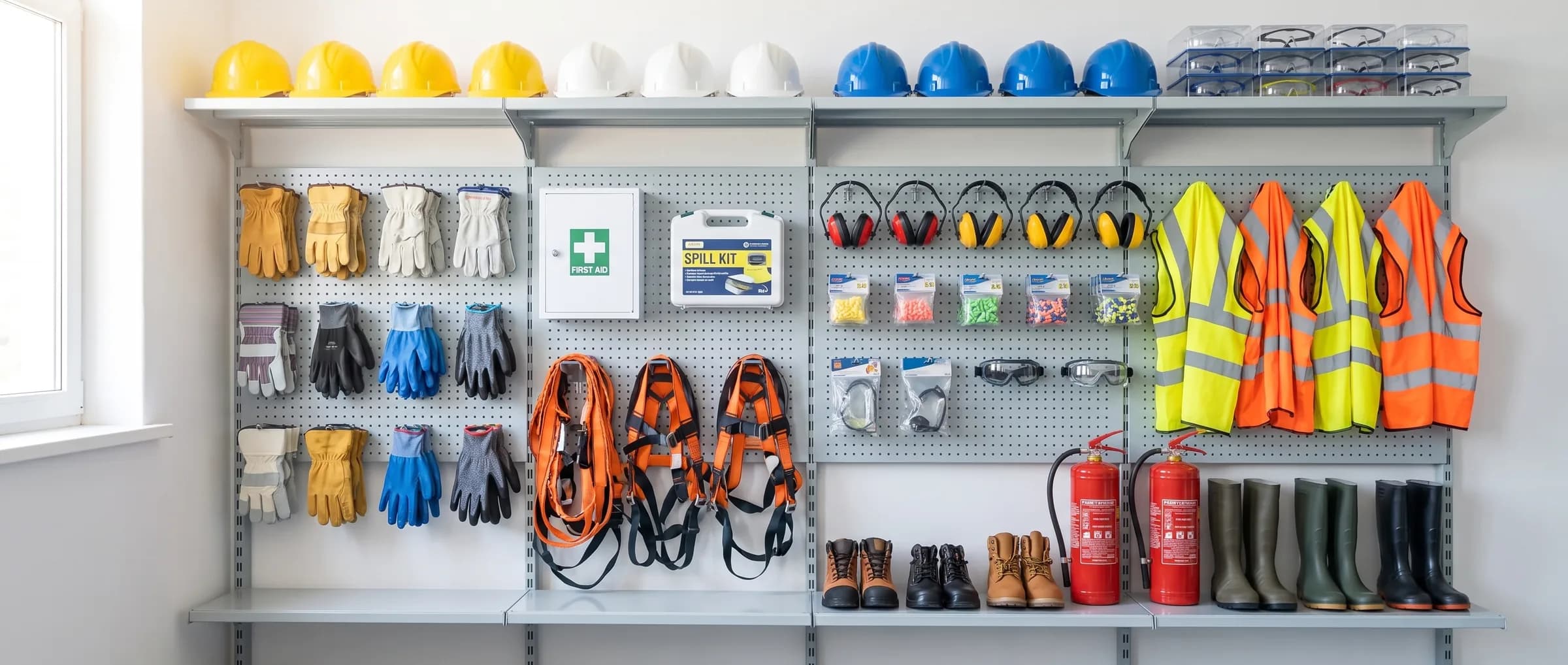
Somewhere on your customers’ sites is every serviceable item you have ever sold them. Almost nobody can produce that list.
This work produces the cleanest data in your business
Think about what one inspection round writes down: every unit you service, its serial, its age, what passed, what failed and why, with a photograph attached and a date it must be seen again. Most companies never build a dataset that clean. The question is whether it is structured for intelligence on the day it is captured, or left to be mined out of PDFs in three years.
What is due decides what goes on the truck
The system knows which units are due, in what sizes, at which sites. That is the loading list for tomorrow morning, and today it is worked out from memory the night before, or not at all.
A failure repeated is a purchasing signal
The same component failing the same way across a book of customers is telling you something about a line you stock, long before the returns do.
The gap between sold and inspected is the pipeline
You know what you sold. You know what you inspect. Everything in between is a conversation nobody is currently having, and it is the cheapest revenue in the business.
Bolted on is not the same as built in
Intelligence added to a finished system can only read what that system happened to record. Deciding at the data model that this is coming is what makes the difference, and it cannot be retrofitted cheaply.
None of the four above is running in a product you can buy today, and we would rather say so here than let you discover it in a demo. They describe what this data shape is for and what we are building toward. The reason to care now is that the decision is made at the beginning or not at all.
You do not adapt to the software. It adapts to you
Every distributor in this trade runs differently, and the ones who last have processes worth keeping. Off-the-shelf products ask you to give those up. We map what you already do and build to it, AI-first from the data model up.
Built around your processes, not a template you squeeze into
We map how the business runs first, on site, including the parts nobody has written down. The workflow you already have is the workflow the software follows. Off-the-shelf products make you change to suit them, and the change is where the cost hides.
AI-native, not a tool with AI added on
Built AI-first from the data model up, so the intelligence sits inside the work rather than in a box bolted to the side of it. That is a different thing from a conventional system with an assistant added late, and it shows in what the software can do with what it knows.
Your vocabulary, on every screen
Your product lines, your customer types, your stages, called what your people already call them. A system that renames everything gets worked around within a month, and the workaround becomes the real process.
It only works because it is not a separate product
The loop on this page crosses the storefront and the CRM at two points. Bought separately, those crossings are integrations you pay for twice and maintain forever.
Industrial & MRO CRM
A deficiency becomes a quote against an account that already has departments, contacts and history. The follow-up clock is the CRM’s clock, so a quote that is not chased shows up as a quote that is not chased.
See the CRMIndustrial & MRO Commerce
The storefront is where the serial is captured. Sell a serviceable item and it enrols itself the same day, which is the only reliable moment to do it. Everything after that depends on somebody remembering.
See the storefrontWhat distributors ask first
We already pay for an inspection system. Why change?
Most of them are built for the company that owns the equipment, not the company that services it for a hundred customers. It shows up in the same places every time: reports you have to fight to get out, cadences that need re-setting every visit, and no way to hand one department its own file. If yours does those things well, keep it. If getting a customer's report out is a phone call to a vendor, that is the shape problem, not a settings problem.
Our technicians do not have tablets. Is that a blocker?
No, and it is the usual starting position. The form runs on a phone. The one thing worth buying before anything else is tags, because scanning a unit is what removes retyping a serial number four hundred times a week.
Our inspection forms are prescribed. We cannot use a generic checklist.
Understood, and that is a hard requirement rather than a preference. The form has to be the form, reproduced exactly, with the fields that must be answered enforced before anything can be submitted. That enforcement is the point: it is what stops last year's report being copied forward.
Where does this sit against the CRM and the storefront?
One system, different faces. What the storefront sells enrols itself here, what fails here becomes a quote in the CRM, and the CRM already knows the account, the department and the contact. Buying them separately is how distributors end up integrating products that were never designed to meet.
We are building this with a small number of distributors
Not a waiting list. A working session: your forms, your cadences, your book of work, and an honest answer about what it would take. If your service department is the part of the business you cannot see into, start there.